
A commercial electrical contractor doing $2 million a year in service work can watch a third of next quarter's schedule evaporate in a slow month — unless a chunk of that revenue is already locked in. That’s why maintenance agreements are so important.
Knowing how to sell electrical maintenance agreements is what separates a contractor with one or two loyal accounts from a business with a steady stream of long-term, contracted revenue. Electrical contractors have historically enrolled a smaller share of their customer base in service agreements than HVAC contractors despite the same underlying math, including recurring revenue, higher lifetime value, and a documented reason to keep coming back.
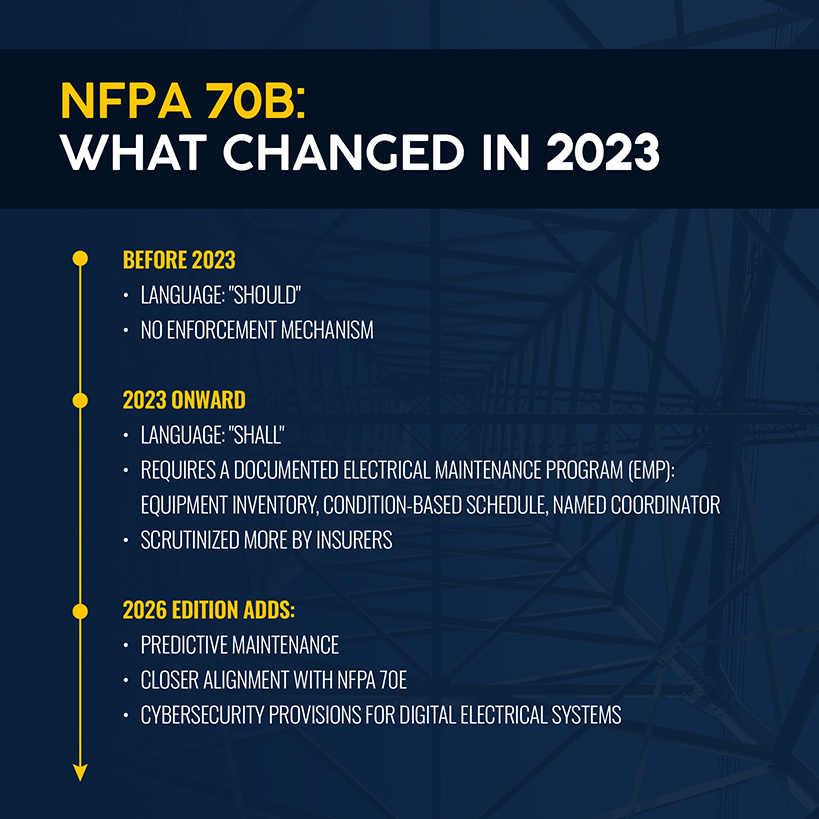
When NFPA 70B became an enforceable standard in 2023, commercial contractors received a new, code-driven reason to the maintenance agreement conversation. What follows are nine steps to help you find the right customers, build a program for real jobsites, price the offering while preserving margin, and sell it in a way that doesn't feel like sales.
What Makes an Electrical Maintenance Agreement Worth Buying?
An electrical maintenance agreement is a recurring service contract that covers a defined set of electrical assets, such as panels, switchgear, circuit breakers, uninterruptible power supply (UPS) systems, transfer switches, and generators. These service agreements include the inspection schedules, testing, documentation, and response commitments attached to such assets.
Your customers don’t need to choose between warranties and maintenance agreements. A warranty covers a single piece of equipment if it fails. An agreement is an ongoing relationship built on a scope the customer can see and tied to a schedule, a set of tasks, and a report at the end of every visit.
The strongest maintenance programs bundle a handful of tangible items rather than rely on vague "priority service" language. A typical scope includes:
- Annual (or more frequent) panel and switchgear visual inspections, plus connection torque checks
- GFCI and AFCI testing on circuits, as applicable
- Thermal imaging to catch loose connections and overloaded breakers before they fail
- Insulation resistance testing on feeders and critical equipment
- Backup-system testing for UPS units, automatic transfer switches, and standby generators on commercial accounts
- A written report after every visit containing findings, test data, and prioritized recommendations
Selling service agreements gets easier when you include substantive offerings. The pitch isn’t just about peace of mind. It’s now about a documented program that facility managers can point to during an audit or an insurance claim.
9 Steps to Build, Price, and Sell Electrical Maintenance Agreements
Each step below builds on the last. Skip one, and the program either underprices itself or falls apart on delivery.
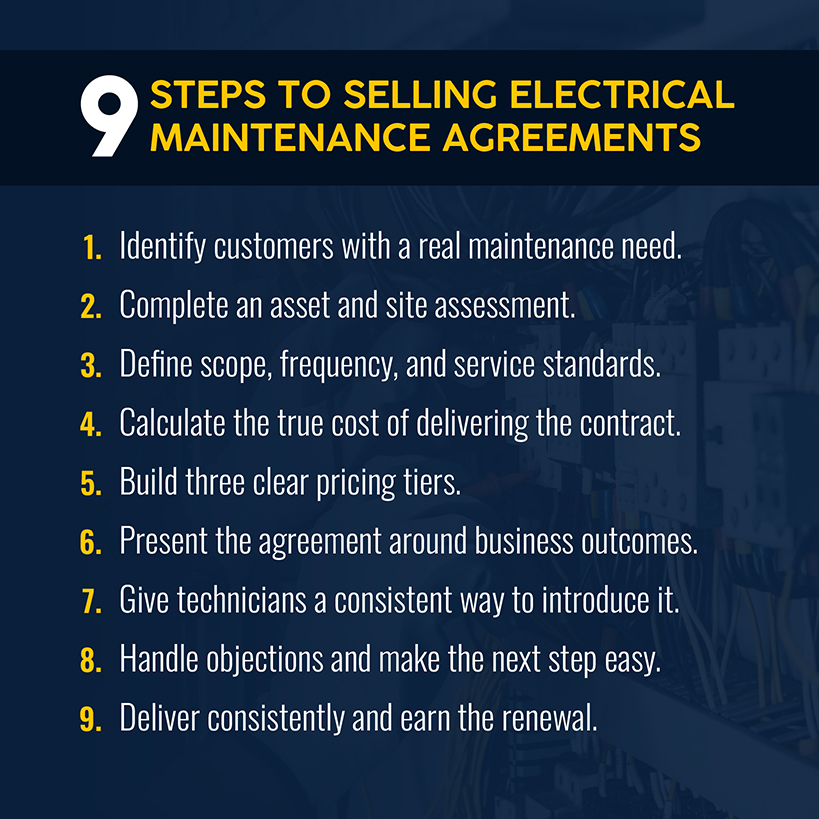
1. Identify Customers With a Strong Maintenance Need
Start with your existing service customers, not a cold list. The best candidates already trust your crew. Look for customers with aging panels, a history of nuisance trips, multi-site commercial accounts, or a facility manager who mentioned an upcoming insurance audit. A midsize commercial contractor with 400 active accounts can usually filter that list in an afternoon by panel age and callback history alone.
Commercial customers with critical operations (data closets, cold storage, medical suites) are the highest-value targets because downtime costs them real money. Again, filtering is important: A five-technician commercial shop doing $1.5 million a year might start by pulling every account with a panel that’s over 15 years old, cross-referencing it against callback frequency, and building an initial pitch list of 40 to 50 sites. Residential and light-commercial accounts still matter, but growth-focused contractors tend to lead with commercial, then use the same infrastructure to add a lighter residential offering.
2. Complete an Asset and Site Assessment
Before you can price anything, you need to know what you're maintaining. Walk the site and document every panel, switchgear, breaker, and backup system for nameplate data, condition, and criticality. A technician can usually cover a three-story office building's electrical rooms in about two hours with a structured checklist in hand.
This assessment aligns with NFPA 70B requirements for a documented Electrical Maintenance Program: a full equipment inventory tied to condition and criticality, rather than the tech’s recollection. Simpro® tracks that inventory, service history, and test results in real time and keeps it in one record instead of scattered photos and a tech's notebook. This becomes especially important whenever a facility manager asks for proof that the program exists.
3. Define the Scope, Frequency, and Service Standards
Scope is where agreements earn their price. At a minimum, your maintenance plan should include panel and switchgear visual inspections, connection torque checks, and GFCI or AFCI testing. Add thermal imaging for anything carrying a real load, as a hot spot on a scan today can become a service call in six months if nobody catches it. For commercial accounts, make sure to include insulation resistance testing and backup-system checks on UPS units.
Select visit frequency by component condition rather than fixed calendar cycles. NFPA 70B's equipment condition assessment is built around this logic: Fuses in good shape need only a periodic visual check, while older or heavily loaded equipment gets inspected annually. Meanwhile, anything supporting a microgrid or backup power system typically needs a shorter interval, regardless of its condition rating.
Whatever frequency you select, pair it with a response-time commitment (48 hours standard, 24 hours or better for premium and commercial tiers) so the customer knows what they're buying. Put it in writing. A verbal promise about response time can easily become a lightning rod during a customer dispute.
4. Calculate the True Cost of Delivering the Contract
Knowing how to price electrical maintenance contracts starts with your costs, versus pricing against your competitor. If you price too close to the cost of two visits, you’ll lose money the first time a technician runs long.
Calculate costs the same way for every visit: labor hours at your loaded hourly rate, plus drive time, materials, technician pay or commission, and overhead. Then work toward a target gross margin in the 30% to 50% range for service-focused electrical work. Note that the visit often breaks even, but your margin comes from what the visit finds.
Run the numbers before you quote. A quarterly commercial visit with two technicians on-site for three hours, plus drive time and thermal imaging equipment, might price out at $500–$700 in direct labor and overhead cost. Quote four of those visits a year at $3,600 total, and your gross margin barely clears 30% before any repairs are found. Quote the same four visits at $4,800, and the math works, with room left for the technician commission.
As you calculate cost and pricing, check your price book. If you’re pricing off stale data or tracking profit in a forgotten spreadsheet nobody updates, you won't know an agreement is underwater until the third quarter of a multi-year term.
The operational fix: Price agreements from the live cost data you use for service calls. Set a schedule to revisit that data, rather than reacting after a problem emerges.
Related: Learn how to build an electrical contractor price book that creates a source of truth for maintenance agreement pricing.
5. Choose a Billing Model and Create 3 Clear Options
Your pricing strategy starts with billing monthly or annually, plus how many pricing tiers you’re offering. The industry standard is three tiers: basic, premium, and a commercial or quarterly step above it, with the middle tier priced to look like the obvious choice. This good/better/best pricing structure gives customers options without overwhelming them or jeopardizing your margin.
Pricing varies by market and scope. Agreements for smaller commercial accounts commonly run in the low thousands of dollars per year, while larger multi-year commercial contracts can run considerably higher, depending on asset count and criticality.
| Tier | Visits per year | Scope | Response time |
|---|---|---|---|
| Basic | Annual inspection | Panel visual inspection, GFCI/AFCI test, written report | 48 hours |
| Standard | Biannual inspections | Basic scope plus thermal imaging and 10% repair discount | 24 hours |
| Commercial | Quarterly | Full scope plus backup-system testing and priority scheduling | 24/7 |
However you price it, work backward from the margin target in step four.
Related: Once your agreements go live, consult our electrical business profit margin guide.
6. Present the Agreement Around Business Outcomes
For commercial prospects, lead with compliance and liability exposure, not "peace of mind." Since 2023, NFPA 70B has been a mandatory standard, with many insurance carriers tying coverage and premiums to documented maintenance quality. A facility without a written Electrical Maintenance Program carries additional safety risk, is more difficult to insure, and harder to defend after a failure.
Frame the maintenance agreement as the solution to NFPA 70B, containing an equipment survey, a maintenance schedule tied to condition, and a named person who’s accountable. The updated 2026 edition folds in predictive maintenance work, moves closer to the personnel-safety standard NFPA 70E, and adds rules addressing cybersecurity risk in digital electrical systems.
Use this regulatory development as a timely, code-driven opportunity to restart the conversation, especially with commercial accounts still relying on an informal or undocumented maintenance approach.
7. Give Technicians a Consistent Way to Introduce Agreements
The best time for selling electrical service agreements is right after a completed repair, as your technician has earned the customer’s trust and is already communicating with them. A tech who just replaced a failing breaker has a better opening than any cold pitch. They can point at what just happened and explain why a maintenance visit would have caught it early.
That's the core of how to sell electrical maintenance contracts: at the point of service, not through a separate sales process.
Here are a couple other tips:
- Use the word “agreement,” not “contract.” It’s a small distinction, but an agreement feels voluntary, whereas a contract feels like something pushed on the customer.
- Reward technicians for their success. A flat spiff per agreement sold, paid weekly, keeps the incentive visible without turning every service call into a pitch.
8. Handle Objections and Make the Next Step Easy
Price is the most common objection, but that doesn’t mean you need to discount. Point out the longer-term savings generated by maintenance visits. An annual or biannual visit will spot loose connections, undersized breakers, or corrosion at a panel lug — findings customers would rather fix on a scheduled visit than during an emergency call.
A customer who declines the agreement doesn't avoid that spending. They just pay for it later as a high-cost emergency call.
For those who say, "we'll get to it," remove the friction to signing up. Use the card already on file, enable e-signature, and offer a start date within the week. The longer the customer waits to decide, the less likely they’ll sign up for the service agreement.
"We already have someone for that" is worth a direct question, not a pitch. Ask when the last inspection occurred and what it covered. Plenty of facilities have an electrician on call for emergencies, but that’s not comparable to a documented maintenance schedule with guaranteed response times.

The operational fix: Account for objections in your quote process, with a card-on-file field and e-signature block already on the document. Instead of a follow-up call the next day or later, the customer can sign up in 30 seconds.
9. Deliver Consistently and Earn the Renewal
Renewals make a service agreement program profitable, since the cost of winning a new commercial account is far higher than keeping the ones you have. Make it easy and automatic by defaulting to auto-renewals with the card on file.
Manual renewals introduce two key failure points. Without auto-renewal on, your staff has to remember to contact members, and it’s possible they forget or don’t have time. And because customers are being asked to choose you again, they might change their mind — or not get around to it.
Build a cadence around the renewal process: Send a reminder 30 days before the charge goes through, then a short follow-up sequence for any declined card. Just because a payment method fails doesn’t mean the customer isn’t interested. They just need a nudge before the account lapses.
Track attach rate and renewal rate in the same system where you track everything else, not in a random spreadsheet. Simpro's Maintenance Planner automates the recurring jobs, renewal reminders, and technician assignments that keep a growing agreement book from becoming an administrative burden the office can't keep up with.
Build Electrical Maintenance Agreements Customers Keep Renewing
Maintenance agreements aren’t a side project. Treat electrical service contracts as a real line of business tracked separately from one-off service work. That gives you job-costing visibility into which accounts are profitable and which need a price correction before the next renewal date.
It's the same operational discipline that shows up across every stage of how you grow an electrical business: The top contractors build systems to track their existing revenue and profitability before they go looking for more of it.
More than 24,000 businesses already run that kind of tracking through Simpro, from the Maintenance Planner that automates recurring jobs to Asset Maintenance Contracts that hold pricing tiers, service-level agreements, and contract value caps in one record instead of a side spreadsheet. If your current setup can't tell you which agreements are actually profitable, close that gap before selling the next one.
Schedule a demo and see what it looks like to run Simpro on your own accounts.
Frequently Asked Questions
How long should an electrical maintenance agreement last?
Twelve months is standard for a residential or commercial service plan, with an automatic renewal unless the customer cancels. You might offer multi-year terms to larger commercial accounts, but even those are usually structured with an annual pricing review, as material and labor costs can shift dramatically from year to year.
Can one electrical maintenance agreement cover multiple locations?
Yes, particularly for property management companies or multi-site commercial customers. Structure it as a single account with a defined start and end date, a shared invoice cycle, and separate asset lists and service histories for each site. That keeps reporting clean without forcing you to manage five contracts for one customer relationship.
Should corrective repairs be included in the maintenance contract price?
Generally, no. The agreement covers scheduled inspection, testing, and documentation. Repairs found during a visit get quoted separately, usually at a discounted rate built into the agreement tier. Bundling unknown repair costs into a flat annual price leads to underpricing, as you're guessing at the cost of work you haven't seen yet.
How should the agreement change when a customer adds new electrical assets?
Update the asset inventory and reprice at the next renewal, unless the addition adds enough new equipment or risk to justify a midterm amendment. Adding a backup generator or a new panel feeding critical loads changes both the maintenance scope and the site criticality, so the agreement needs to reflect that before the next visit, not after something gets missed because it was never on record.


 Back to top