
A plumbing inspection checklist is the most direct way to catch plumbing problems before they turn into emergencies. The pipe that bursts at 2 a.m. on a commercial job site likely showed signs weeks earlier: a slow drain, a soft spot in the wall, a pressure reading that nobody wrote down. Running a consistent plumbing maintenance checklist is what separates contractors who correct those issues early from those fielding crises.
For contractors managing maintenance contracts across multiple commercial sites, a checklist should be part of your operational backbone. Checklists mark the difference between an ad hoc visit and a documented inspection that can be quoted, invoiced, and defended if something goes wrong later.
Plumbing Inspection vs. Plumbing Maintenance: What's the Difference?
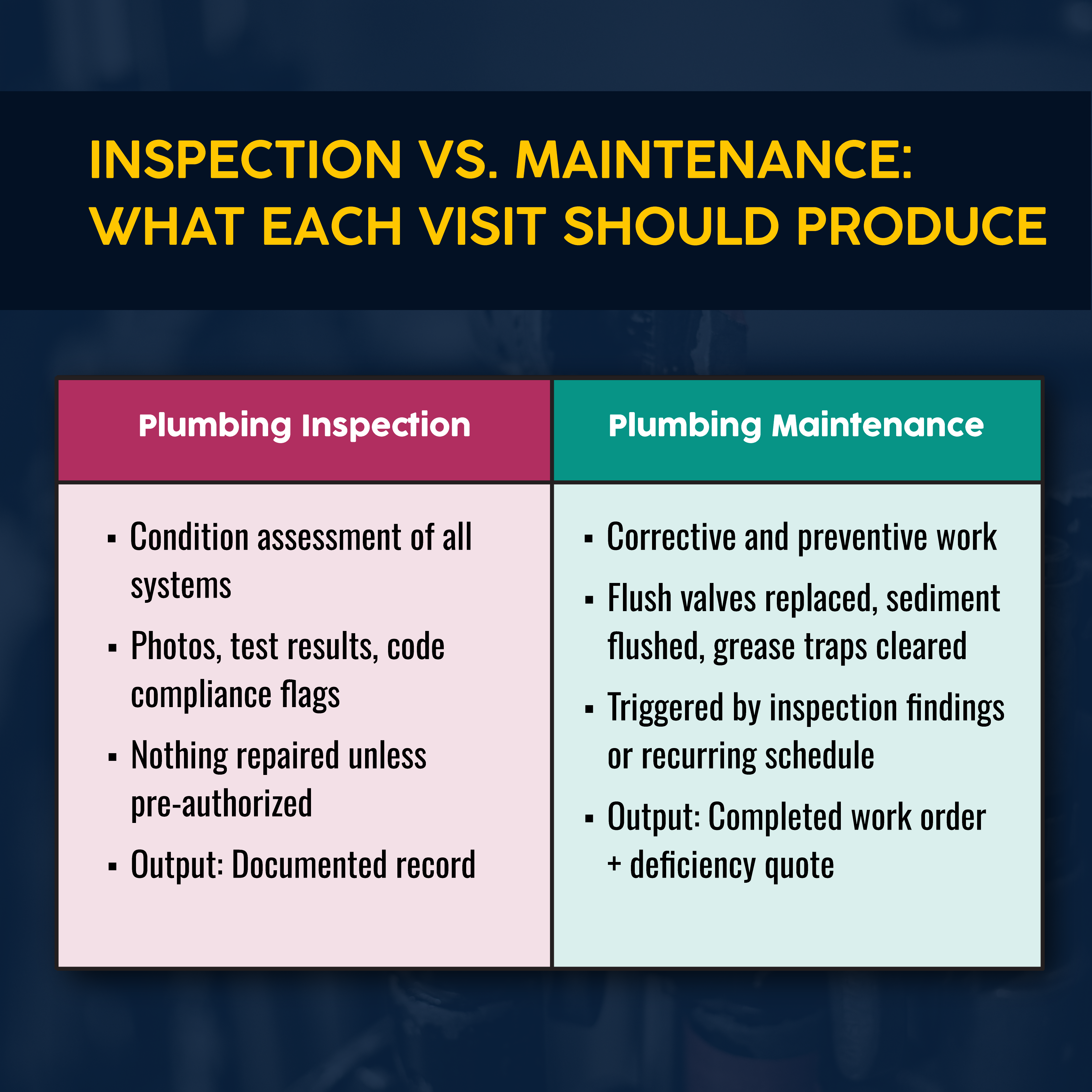
A plumbing inspection is a systematic assessment. You're documenting the current condition of all water supply, drainage, venting, and fixture systems. The output includes photos, test results, notes on wear, and code compliance flags. Nothing gets repaired during an inspection unless the deficiency is minor and already authorized.
Plumbing maintenance is the corrective and preventive work that follows, including flushing water heaters, replacing flush valves, and clearing grease traps. Many commercial maintenance visits combine both. A technician can inspect a 20-fixture restroom, document three flush valve failures, replace two on the spot, and create a deficiency quote for the third. That's an inspection driving a maintenance action, which is how it should work when your workflow connects them.
When Should Plumbing Systems Be Inspected and Maintained?
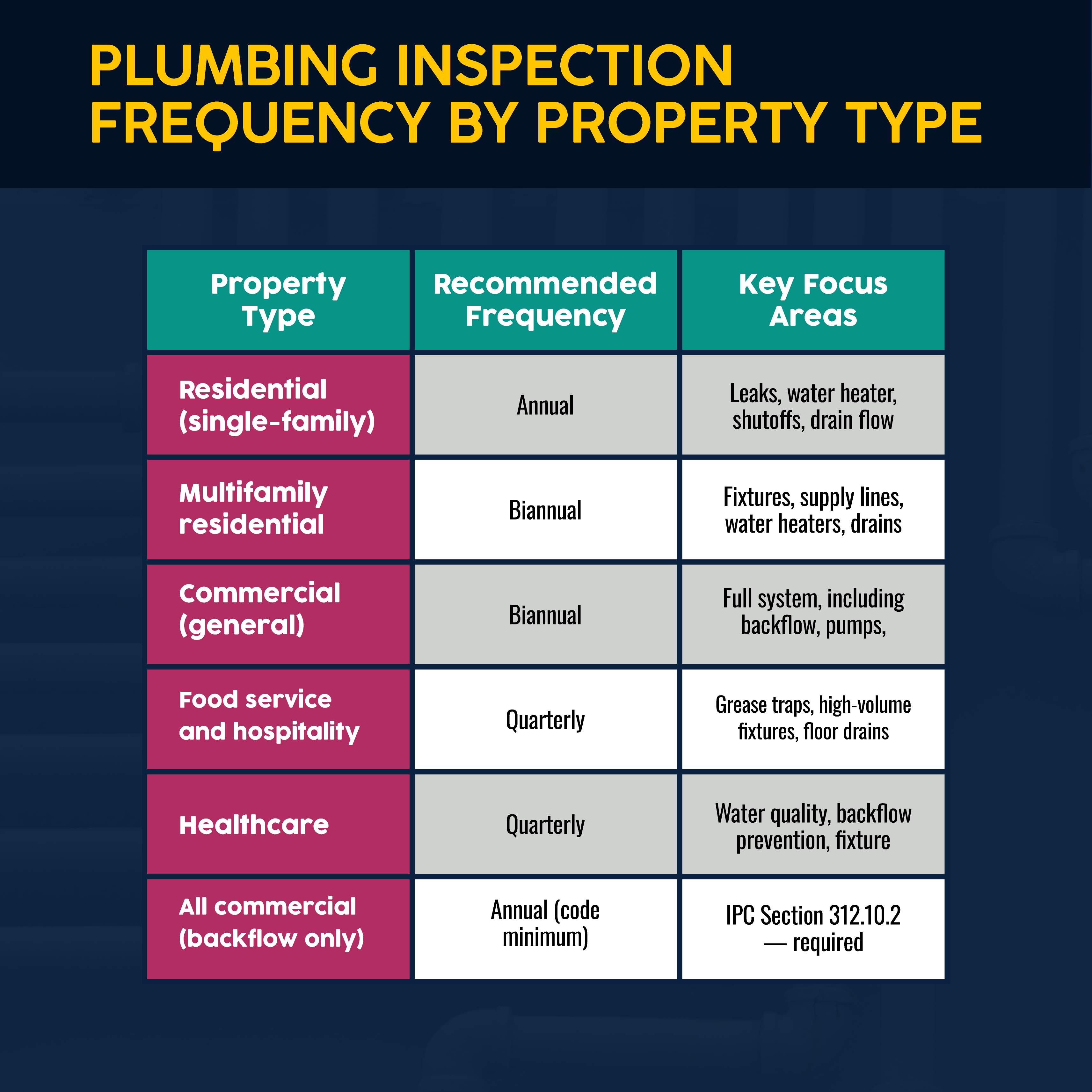
Inspection frequency depends on property type, system complexity, and how hard the fixtures work. Here's the baseline most contractors use to build regular maintenance schedules:
- Monthly: Basic visual checks of high-use fixtures, drain flow, and water pressure. Typically handled by on-site facility staff, with contractor oversight for flagged items.
- Quarterly: Food service, hospitality, and healthcare properties warrant quarterly walkthroughs covering restrooms, floor drains, grease traps, and water-heating systems.
- Biannually: Most commercial and multifamily residential buildings benefit from twice-yearly inspections covering pipe condition, drainage performance, shutoff-valve operation, and water heater status.
- Annually: Full inspections including sewer camera work where warranted, backflow-prevention testing, and maintenance plan updates. Annual backflow-preventer testing is a code requirement under International Plumbing Code (IPC) Section 312.10.2.
Plumbing Inspection and Maintenance Checklist
This plumbing inspection checklist covers what a commercial contractor should document on a routine maintenance visit. For residential work, most items still apply.
1. Check for Visible Leaks and Water Damage
Walk every mechanical room, utility corridor, and restroom and check for:
- Active drips or moisture at pipe joints, valves, and fixture connections
- Staining, efflorescence, or soft spots on ceilings, walls, or floors
- Evidence of past repairs (mismatched fittings, copper patches, compression sleeves) that might be masking a deeper issue
- Water meter movement with all fixtures off, indicating hidden leaks within the system
A dripping faucet can waste more than 3,000 gallons per year, while a leaky toilet can waste even more.
The stakes on commercial properties are even higher. Commercial plumbing failures cost U.S. businesses billions a year, and a majority of commercial water damage losses trace back to plumbing systems, HVAC equipment, and appliances.
The operational fix: Document with GPS-tagged photos at every location. When a client disputes whether a leak was present during your last visit, the best evidence is a timestamped photograph.
2. Inspect Pipes for Corrosion, Rust, and Wear
Make sure each visit includes an examination of pipes for:
- Surface corrosion at copper joints
- Deteriorating galvanized sections
- Brittle chlorinated polyvinyl chloride pipe near heat sources
- Sagging pipe runs
- Any DIY repairs using incompatible materials.
Pipes showing signs of wear in multiple locations on the same visit usually indicate a systemic issue, not isolated damage. Document everything in writing, even when it isn't an immediate hazard.
The operational fix: Flag aging sections for a capital replacement quote. A documented recommendation protects you if the system fails six months after your visit.
3. Test Water Pressure and Flow
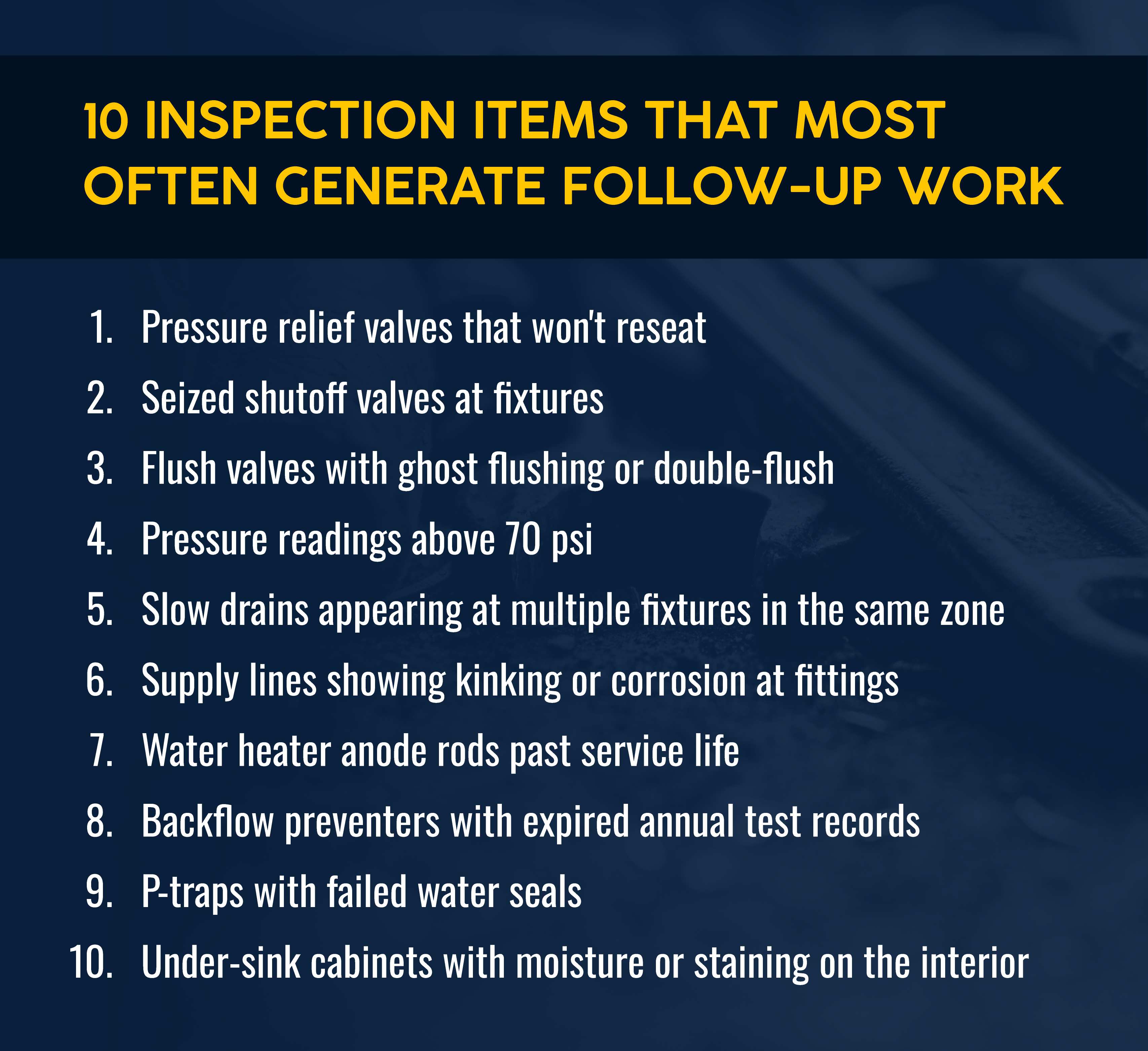
Healthy commercial systems run 40-60 pounds per square inch (psi). Above 70 psi, you're accelerating wear on fixtures, valves, and appliances. Make sure to:
- Use a pressure gauge at an outdoor spigot.
- Record static pressure and note any floor-to-floor differential in multistory buildings.
- Check flow rate at representative fixtures.
Leaks and aging fixtures are common causes of elevated utility bills. Investigate pressure readings that trend in the wrong direction.
The operational fix: Log readings on every visit. A single low reading is a flag. A trend of dropping pressure across multiple visits is a diagnosis.
4. Inspect Drains, Traps, and Waste Lines
This is a straightforward area where diligence prevents bigger problems down the road. Check:
- Drain speed at every sink, floor drain, and toilet. Slow drains that are new since the last visit indicate a developing blockage.
- Gurgling when fixtures drain (suggests a venting issue or partial blockage downstream)
- P-trap integrity, as dry traps allow sewer gas entry; flag S-traps for replacement.
- Cleanout accessibility throughout the system
- Horizontal drain slope (generally at least 0.25 inches per foot, per IPC)
Many emergency plumbing calls to commercial properties involve sewer backups, which regular drain inspections can often prevent.
The operational fix: Slow drains appearing across multiple fixtures in the same zone warrant a sewer line camera inspection before you assume a simple blockage.
5. Check Toilets, Urinals, and Flush Valves
Check each fixture for the following:
- Flush operation and bowl clearance
- Tank integrity or flushometer diaphragm condition
- Fixture stability at the base and the shutoff valve below.
Missing or nonoperational shutoff valves are commonly cited code violations and one of the fastest ways to turn a minor repair into an emergency shutdown.
The operational fix: Build a fixture-level asset record for high-traffic facilities. The third flush valve failure in two years should trigger a capital replacement conversation, not a repair ticket.
6. Inspect Faucets, Showerheads, and Fixtures
Make sure you look thoroughly for the following:
- Handle operation and seal condition
- Aerator flow
- Showerhead spray pattern
- Under-sink connections, including garbage disposal mounts and drain connections, when present
Under-sink areas can accumulate slow leaks that go undetected because nobody looks. Additionally, check cabinet interiors for evidence of water damage.
The operational fix: Document by specific fixture location. When the same fixture appears in the deficiency record in two consecutive inspections, escalate in writing.
7. Examine Water Heaters and Hot Water Systems
Water systems require a separate check during each inspection, including:
- Tank exterior for rust, corrosion, and seepage at the base
- Pressure relief valves, with a manual test of the lift, which should open and reseat cleanly
- Sediment flush, where accessible
- Temperature settings (120°F minimum residential, 120–140°F commercial)
- Anode rod condition, expansion tank where required, and flue integrity on gas units
An easy way to fail inspection is to have an Improper water heater setup, including missing pressure-relief valves (PRV), inadequate clearance, or non-code drain line termination.
The operational fix: Photograph the PRV test, the temperature dial, and the drain line termination on every visit. These three items are central to insurance disputes after a water heater failure.
8. Test Shutoff Valves and Supply Lines
Valves that have been in place for years can seize, but they’re rarely tested until there's an emergency. Make sure you operate the:
- Main building shutoff
- Every zone valve
- All fixture-level angle stops, including those serving washing machines and dishwashers
Flag any braided stainless water line showing kinking, corrosion at fittings, or age beyond 10 years. On complex commercial systems, maintain a valve map.
The operational fix: A seized valve gets replaced on the spot or quoted immediately. It isn't a cosmetic issue.
9. Inspect Pumps, Backflow Devices, and Specialty Equipment
Annual backflow preventer testing is required under IPC Section 312.10.2, following ASSE standards 5013, 5015, 5020, 5047, 5048, 5052, and 5056. Results must be documented.
- For booster and circulation pumps, note unusual noise or vibration.
- For sump pumps, test under load, and check float switch function.
- For grease traps in food service facilities, document accumulation, and confirm the service interval is being met.
- For ADA-accessible commercial facilities, verify fixture heights, reach clearance, and approach space.
Violations create liability exposure for your client and raise questions about your maintenance record.
The operational fix: Build individual asset records for each pump and backflow device. Documented inspection history becomes especially valuable when disputes arise.
10. Review Outdoor Plumbing and Drainage
Check hose bibs and exterior spigots for the following:
- Freeze damage and backflow prevention
- Irrigation connections
- Storm drain strainers and channel slope
- Downspout connections
The operational fix: Add seasonal annotations to your template: "pre-winter insulation status" in fall, "freeze damage assessment" at the first spring visit. Scan for exposed piping that needs winterization.
11. Document Issues, Photos, and Recommended Follow-Up Work
Every inspection should produce a written record of every item checked with the following:
- Pass/fail/monitor status
- Timestamped GPS-tagged photos of deficiencies and key systems
- Notes on anything approaching the end of its service life
- A written summary for the client
35% of maintenance professionals still rely on paper-based documentation, according to an UpKeep report. When a client's insurer asks for maintenance records, paper notes don't hold up as well as digital records.
The operational fix: Connect inspection documentation directly to your quoting workflow. When a technician marks a failed asset, they should generate the repair quote in the field, not back at the office.
Related: See how Simpro®'s Maintenance Planner helps plumbing contractors manage recurring inspections and asset tracking at scale.
12. Update the Customer's Maintenance Schedule
After each inspection, update records with the following:
- The next scheduled inspection date
- Any new assets added to the maintenance schedule
- Backflow testing renewal dates
- Seasonal service triggers.
When a backflow test is three months overdue, you’ve created liability for yourself and the client.
The operational fix: Automate this step by adopting software that feeds standardized maintenance checklists directly into your scheduling system. No more depending on technicians remembering to update the spreadsheet.
How Digital Plumbing Checklists Help Contractors Standardize Maintenance
Paper checklists get lost or damaged, and they don't generate the audit trail that protects you when a client's insurer asks questions. Digital inspection forms with required photo capture, conditional logic, and GPS tagging eliminate documentation inconsistency across your field team.
Moving to Simpro helped Kiely Plumbing boost revenue by 35% and cut admin time by 63%. The gain wasn't from working more hours. It came from eliminating manual handoffs between field and office operations.
Getting those maintenance contracts in the first place is a separate challenge. The SEO strategies that work for plumbing businesses are increasingly built around service-specific content. Maintenance agreements and commercial accounts are higher-value search terms than emergency calls. Contractors are positioning inspection programs as the core offering, rather than break-fix availability.
Related: See how these plumbing advertising examples can help you win business.
Turn Plumbing Checklists Into Better Service Records
Growing your plumbing profit margins on maintenance work means tightening the loop between what your technicians find in the field and what gets quoted, approved, and invoiced.
The operational question for a growing plumbing business isn't, “What should we check?" Rather, you need to ask, "How do we make sure every technician checks the same things, documents them consistently, and connects findings to billable follow-up work?"
Preventive plumbing maintenance delivers the biggest returns when it's consistent, documented, and connected to follow-up work. Paper-based maintenance records don’t compound. The math is straightforward, but the execution can be more difficult.
Simpro's Maintenance Planner, part of Simpro's plumbing field service software, lets you schedule inspections by asset, automate renewal reminders, and give technicians mobile access to standardized checklists with photo capture, all connected to quoting and invoicing. The technician marks an asset as failed; a deficiency quote is ready before they leave the site.
Schedule a demo to see how Simpro handles that workflow end to end.


 Back to top