
The field services industry has faced numerous challenges in recent years, from labor shortages and skill gaps to rising customer expectations — many of which were brought on by the COVID-19 pandemic. Yet, this period also underscored the transformative potential of technology, particularly contactless solutions, to enhance efficiency, optimize operations, and adapt to new customer expectations of safety and convenience.
As contactless technology evolved and became more widespread throughout service-heavy industries, its role expanded beyond simply reducing physical interactions. Today, it’s reshaping how consumers and businesses handle scheduling, service delivery, and more.
One growing area of interest for field service business owners and operators, in particular, is payments. While implementing new technologies always carries some risks, the benefits of faster, easier, and fully automated payment systems are hard to ignore. McKinsey & Company reported that technology advances have led to major performance improvements in field services operations, including 10-40% lower costs, 20-30% improved productivity, and 5-30% time travel reduction.
To truly strengthen your financial position, your business needs a centralized payment solution that connects seamlessly with your existing systems (e.g., field services management, CRM, or accounting software), reduces days sales outstanding (DSO), and empowers you to get paid quickly, whether through in-field, online, or recurring payments.
Despite its upfront value, many businesses underutilize their payment solutions, viewing them solely as a transactional processing tool. In reality, a payment solution is a transformational asset that speeds up payment cycles, accelerates cash flow, and fosters agility. Suppose your company is only using your payment solution for basic payment processing (or worse, not using one at all). In that case, you’re missing out on a powerful feature that turns financial operations from a burden into a competitive advantage.
 What is Cash Flow?
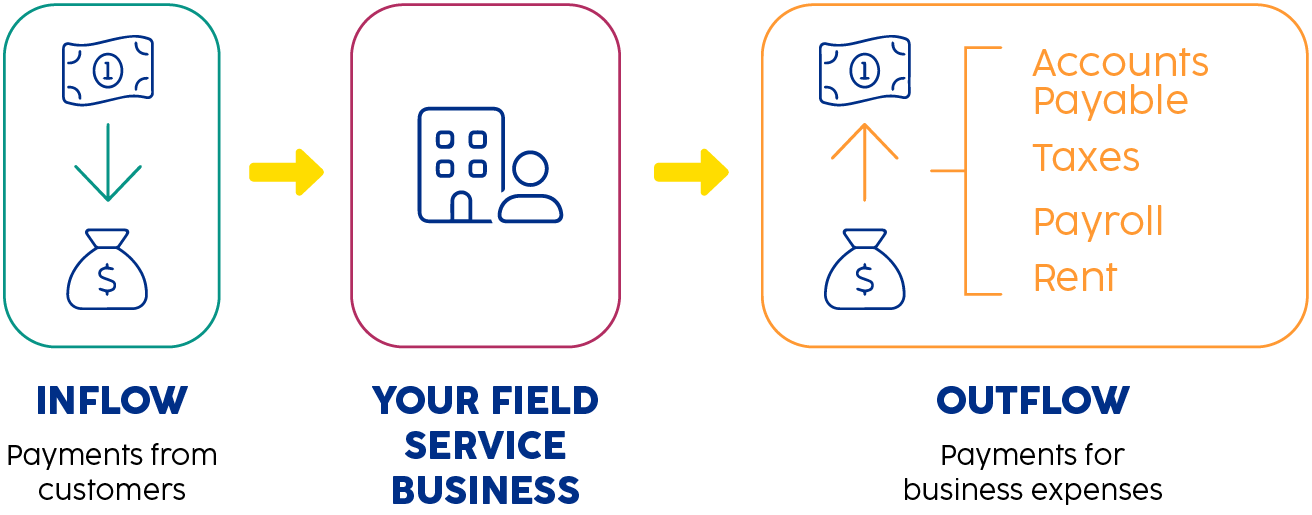
Cash flow refers to the movement of money in and out of a business, reflecting how much cash is generated and used. In other words, it indicates the liquidity and overall health of the business entity. There are two main types: positive cash flow (i.e., cash inflows and outflows result in surplus cash) and negative cash flow (i.e., cash outflows exceed inflows). High DSO is a major contributor to negative cash flow, as outstanding invoices tie up capital needed for business operations.
For example, businesses dealing with slow invoice processing, duplicate data entry, or difficulty in collecting payments and reducing outstanding receivables may not be leveraging the full potential of their payment solution — or again, might need to consider investing in one altogether. In this comprehensive guide, we’ll show you how to achieve positive outcomes for your field services business by investing in a payment solution.

Understanding Payment Solutions: What Your Business Needs To Know
Payment solutions have been described in many ways: an important cog in the payment process system, the backbone of secure transactions, and a literal gatekeeper of customers’ payment data.
Now, if you’re still unsure about payment solutions and what they are, look to B2C. Some prime examples of payment solutions include PayPal, Stripe, and Square. As of 2023, digital payments have become nearly universal, with over 90% of consumers using some form of digital payment in the past year — a figure that saw significant acceleration during pandemic lockdowns.
Even though B2B is trailing behind (in typical B2B fashion), younger generations are flocking to the workplace and expecting the same seamless experiences they enjoy as consumers. More than just a transaction processor, a modern payment solution is a strategic engine that unifies your accounts receivable (AR) and accounts payable (AP) workflows, drives instantaneous payments, and keeps cash flowing — so your business is always ready for what’s next.
Next, let’s explore three positive business outcomes of payment solutions in detail.
The Three Positive Outcomes of Payment Solutions
Payment solutions provide growth-minded professionals with three key benefits: the ability to offer speedier and easier payments, increase operational efficiencies, and accelerate cash flow. By reducing delays, automating billing and collection, and simplifying AR and AP processes, payment solutions remove barriers that can slow business growth and undermine your company’s financial health.

Outcome 1 Offering Speedier, Easier Payments
In a world where convenience is a top concern, your customers expect payments for services to be just as easy as booking them. Field services businesses that provide quick, flexible, and transparent payment options benefit from reduced processing costs and friction in operations — allowing them to eliminate manual follow-ups, minimize financial risk, and manage payments from an all-in-one system.
By removing obstacles, businesses encourage on-time (or even immediate) payments and improve cash flow health. A modern payment solution makes this possible by centralizing workflows and empowering customers to pay in a way that accommodates their needs.
Addressing the Common Pain Points in Traditional Payment Solutions
According to QuickBooks, 43% of small business owners identify cash flow as a significant issue, with 74% noting that their challenges have stayed the same or worsened over the past year, and only 26% seeing improvement. For many field service companies, slow invoice turnaround times, manual collection processes, and delayed payments are major contributors to their overall business challenges.
Reconciling accounts receivable further complicates financial management, making it difficult to maintain accurate records and predict incoming cash reliably. Additionally, inconsistent billing cycles and invoicing errors lead to delays, extra follow-up work, and disrupt your capacity to collect payments quickly.
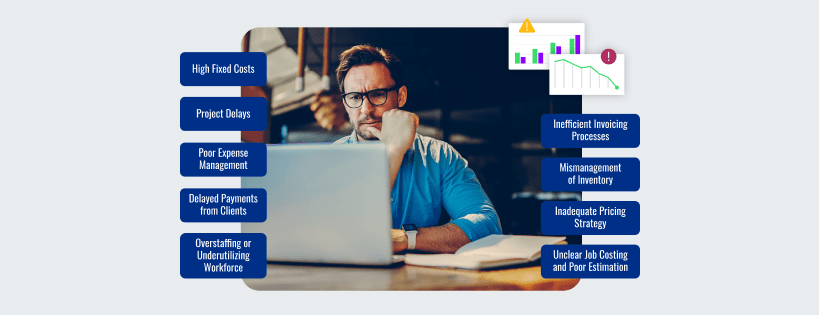
Implementing a payment solution helps remedy these issues and presents many benefits to your business, including the ones listed below.
Providing Flexible Payment Options
With a modern payment solution, businesses can embed payment links directly into invoices, collect payments through secure online portals and over the phone, enable in-field mobile transactions, and support automated, recurring payments. By offering various payment methods — such as credit and debit cards, digital wallets, and bank transfers — a payment solution encourages prompt payment to shorten the payment cycle, ultimately improving cash flow and reducing DSO.
Enabling Faster Closeouts
Field technicians can accept payments on-site immediately after completing a job with a payment solution, eliminating delays and minimizing the need for post-service invoicing or manual follow-up calls. Not only will your organization reduce outstanding receivables and decrease DSO, but you’ll also simplify AR processes, which will help your business maintain strong liquidity and allow your team to focus resources on higher-value tasks outside of chasing payments.
Improving Operational Clarity
A simplified, centralized payment process improves visibility into payment status and automates reconciliation steps. Consolidating AR and AP workflows allows businesses to gain tighter control over incoming cash while lowering the administrative burden on their financial and operational teams. This level of clarity supports better decision making and enables more accurate financial forecasting and planning.

Want to revisit what your business needs in a payment solution? Circle back to the previous section on understanding payment solutions, or dive deeper into the next positive business outcome.
Outcome 2 Enhancing Operational Efficiency
Operational efficiency is essential for field service businesses looking to lower costs, improve accuracy, and focus internal resources on high-value tasks. However, manual payment and disconnected back-office processes — such as invoice creation, data entry, and bill reconciliation — undermine these goals by slowing cash flow, introducing hidden costs, and placing unnecessary strain on internal teams.
Payment solutions connect entire financial ecosystems by unifying invoicing, payment tracking, and reconciliation into a single integrated workflow, eliminating siloed processes to gain a single source of truth for all financial activity. This type of foundation supports confident decision making while improving compliance and operational readiness.

Addressing the Common Pain Points in Financial Operations
Many field service businesses manage a complex web of disconnected tools and manual processes, from scheduling and quoting to invoicing and payment reconciliation. These fragmented workflows often result in duplicate data entry, delay finalizing financial records, and lead to other common errors.
As a result, teams waste valuable time troubleshooting various discrepancies instead of focusing on work that drives service excellence and profitability. Over time, these inefficiencies erode margins and limit a business in their ability to scale effectively.
By integrating tech stacks with a more comprehensive payment solution, businesses can overcome these obstacles and unlock a range of benefits, as outlined below.
Streamlining Financial Workflows
A payment solution acts like a unified operational hub. Integrating accounting software with AR and AP processes and field service management systems, your organization automates tasks like invoice generation, payment tracking, and reconciliation. With this level of consolidation, your business ensures data consistency and reduces administrative overhead. Ultimately, your organization will enable cross-functional business strategy, operational planning, and executive direction — all because it gained increased visibility into cash flow and financial performance.
Reducing Errors and Improving Data Integrity
As many of us have come to learn in recent years, automation significantly reduces the human errors that often come with manual entry and fragmented systems. With accurate, centralized financial data, your teams minimize rework and workarounds, support stronger forecasting, and trim down the likelihood of risk disputes. Using a reliable foundation of clean data, company leadership can also focus on strategic decisions and plan with greater agility.

Freeing Up Teams for Higher-Value Work
As manual tasks and redundant processes lessen — such as payment status follow-ups, invoice approvals, and data reconciliation — financial and operations teams can dream far beyond day-to-day efficiency. Freed resources allow for deeper financial analysis, more comprehensive scenario planning, and proactive risk management. Additionally, with many administrative burdens reduced, cross-functional collaboration will improve, enabling finance, operations, and field teams to align on shared growth objectives. This will empower your business to scale sustainably while maintaining its competitive edge.
Need a quick refresher on the business value of payment solutions? Return to the earlier section. If you’re ready to continue, let’s venture into the next benefit of these solutions.
Outcome 3 Accelerated Cash Flow
Maintaining strong, predictable cash flow is imperative for field service businesses looking to stay resilient and grow in a competitive market. But it’s harder than many would think — 91% of business owners and managers have cash flow issues, which are caused by labor costs, seasonal fluctuations in business, and late payments from customers. Delayed payments and inconsistent cash inflows strain liquidity, limit investment in new projects, and create unnecessary financial risk.
When companies work toward providing a smooth, convenient payment experience, they can better access working capital to fund new services, expand their workforce, and even toughen their financial resilience against market shifts.
Before exploring all the tangible ways a payment solution can accelerate cash flow, it’s important to understand the common cash flow challenges that field service businesses face today.

Addressing the Common Pain Points in Cash Flow
Manual invoicing, slow approvals, and time-consuming payment collection can trap a considerable amount of revenue in outstanding balances for weeks or even months. According to PwC UK capital study, DSO has increased 6.6% over the past five years, making it more difficult to pay suppliers on time and maintain healthy working capital reserves.
Over time, this strains operational flexibility and forces businesses to rely on credit lines or short-term financing, which can weaken profitability and add unnecessary financial risk. Beyond these operational impacts, inconsistent cash flow makes it difficult for businesses to forecast accurately and plan for growth initiatives with confidence. Leadership teams often face tough decisions when unexpected costs arise and miss out on opportunities to invest in equipment, technology, or talent that present themselves.
Fortunately, businesses can uncover numerous benefits — as described below in the following points — by simply integrating a payment solution into their current tech stack.
Creating Shorter Payment Cycles
The pandemic accelerated the shift to cashless transactions due to health concerns, low currency exchange rates, and a surge in online ordering. As contactless payments became the norm in B2C, this trend quickly spread to B2B. Similar to cashless payments, a payment solution helps businesses collect payments immediately upon job completion — whether in the field, through secure online portals, or via embedded invoice links — and expedites cash availability. By automating payment requests and offering multiple payment options, businesses remove the barriers that have traditionally slowed customer payment behavior and encourage timely payments.
Improving Liquidity and Forecasting
The JPMorgan Chase Institute analyzed over 500,000 U.S. businesses and found that the median small business in the U.S. holds just 27 days of cash reserves, leaving many firms only a month away from a cash crunch. But when payments come in more predictably, businesses can maintain stronger liquidity to support ongoing operations and absorb unexpected costs without financial strain. Enhanced cash flow transparency essentially means “breathing room” and gives finance leaders clear insights into available working capital to plan confidently for the future. Stronger forecasting also limits the risk of reactive decision making and empowers businesses to allocate their resources as intelligently as possible.

Strengthening Financial Resilience
Going beyond day-to-day operations, accelerated cash flow fortifies a business’ long-term resilience. Simply put, strong cash reserves give companies more leeway to navigate unexpected disruptions, market downturns, or sudden shifts in customer demand without compromising stability. Businesses with healthy liquidity can negotiate better terms with suppliers, seize strategic acquisition opportunities, and invest in future initiatives on their terms.
Looking for a quick recap on the business value of payment solutions? You can double back to the earlier section. Feeling ready to move on? Let’s dive into what the different roles in your organization look for with this specific technology.
Understanding Payment Solutions by Role
Selecting the right payment solution for your business begins with understanding the specific needs of your workforce. Each team within a field service organization — administration, accounts, operations, finance, and field staff — faces unique challenges that a payment solution can help address.
So, what does each job role need from a payment solution? And how can field service leaders facilitate meaningful discussions to find the best fit for everyone’s needs? Let’s explore!
1 Administration
The administration team’s primary goal is to reduce administrative burdens and enhance efficiency. Since payment solutions automate tasks, they can minimize manual data entry, eliminate errors, and free up time for more strategic work. Administrators search for tools with user-friendly dashboards, customizable reports, and seamless integration with existing systems. When discussing payment solutions with your admin team, emphasize how much automation can streamline daily tasks, reduce paperwork, and support KPIs related to accuracy and efficiency.
2 Accounts
Accounts teams are at the heart of financial management, focusing on maintaining cash flow, managing accounts receivable, and ensuring accurate reconciliation of transactions. A major challenge for this department is the risk of errors and delays from manual reconciliation, which can disrupt cash flow and drain resources across the entire business. Payment solutions offer real-time tracking and automated reconciliation to minimize these roadblocks. Just reinforce how this payment tool can improve accuracy, shorten payment cycles, reduce DSO, and enhance cash flow predictability — all critical to maintain a steady, healthy financial position.
3 Operations
Operations teams focus on maintaining smooth workflows and minimizing disruptions that could impact service delivery. For them, a payment solution must ensure swift and secure payment processing, allowing field teams to work efficiently without delays. Operations will prioritize features that enhance transaction speed, reduce downtime, and provide performance insights. Be sure to emphasize how a reliable solution can help with service delays, optimize workflow management, and provide real-time data to drive continuous improvement in service delivery.
4 Finance
With a focus on financial oversight, budgeting, and strategic planning, the finance team relies on payment solutions that offer advanced data analytics and detailed reporting to protect cash flow health, strengthen oversight of AR and AP cycles, and ensure regulatory standards. These capabilities enable the team to make informed decisions, protect the company’s financial health, and bolster compliance with regulatory standards. In early discussions, emphasize how a payment solution can provide real-time insights, simplify audit processes, and offer a transparent view of cash flow, directly supporting key KPIs like expense control, financial reporting accuracy, and fraud detection rates.
5 Field
For field workers, their top priority is having fast, simple payment options that fit seamlessly into workflows. The ideal solution is a mobile friendly and supports contactless payments, instant invoicing, and existing field management tools. This allows field teams to focus on delivering services without getting bogged down by administrative tasks. Don’t hesitate to engage with field staff by showing them how the right payment solution can trim down time spent handling manual payments and contribute positively to overall team productivity.
Gaining workforce buy-in is vital for the success of any payment solution. When your team understands the benefits and feels involved in the decision-making process, the investment becomes more effective because of smoother internal adoption.
But once you have buy-in, what are the next steps? That’s where Simpro can help. With Simpro’s intuitive platform and seamless implementation process, your team will be satisfied with the solution you’ve invested in and fully embrace its many benefits.

Simpro’s intuitive platform and implementation process

Simpro Payments: The Ultimate Payment Solution
In this guide, we’ve explored what makes the perfect payment solution — think of one that streamlines financial management, simplifies billing and collection, and accelerates cash flow. Simpro Payments checks all of these boxes by eliminating manual errors, reducing reconciliation headaches, and improving financial visibility.
With Simpro Payments, your team can manage end-to-end payment workflows on one centralized platform — from inquiry and invoice to payment. Our well-integrated solution empowers field services organizations to get paid faster, operate more efficiently, and prioritize cash flow without compromising on control or security.

Discover how easy it is to drive stronger financial outcomes and scale your business with confidence.
Learn more about Simpro Payments and all the ways it can transform your operations today.

Common FAQs About Payment Solutions
Integrating a payment solution with your FSM software offers two key advantages: increased efficiency and enhanced financial control. By linking payments directly to your FSM system, you can streamline the process from invoicing to payment, minimizing errors and eliminating manual reconciliation. This level of automation speeds up cash flow, provides real-time financial insights, and improves the customer experience with convenient, flexible payment options. Using a reliable FSM platform, like Simpro, centralizes all financial data, ensuring a single source of truth for improved decision making and compliance throughout the payment process.
A payment solution handles customer transactions and transfers the data to your accounting software for record keeping and financial reporting. Not only does this ensure payments are tracked properly, but it also allows for greater efficiency by connecting a payment solution directly to your FSM software. Integrating with FSM software, such as Simpro, streamlines your entire workflow — from job management to payment processing — and automatically syncs data between field operations, invoicing, and accounting. This reduces manual data entry and reconciliation errors while allowing for real-time financial visibility within a unified platform.
No, connecting to a payment solution actually simplifies your reconciliation process as opposed to adding an extra step. By integrating a payment solution with FSM software, payments are automatically recorded and synced with your accounting system, reducing the need for manual reconciliation and streamlining processes.
Yes, you can manage who has access to payment data by setting user permissions. This feature allows you to restrict payment and financial information to authorized personnel only, ensuring sensitive data is safeguarded. You can customize access levels based on roles and grant permission to team members to view, edit, or manage payment data according to their specific responsibilities.
Once your payment solution is set up and integrated with Simpro, most updates are automatic, so you won’t need to repeat the process. However, it's important to stay aware of provider notifications for security patches, API updates, and compliance changes, which may occasionally require manual intervention.
A payment solution encrypts sensitive information and protects customer data, including credit card details, during transactions. Most payment solutions comply with industry standards, such as PCI-DSS, helping to prevent fraud and data breaches. They also offer fraud detection and prevention (e.g., tokenization, 3D Secure authentication, and monitoring) to combat suspicious activity. Using a payment solution allows you to leverage these advanced security features for better peace of mind.
No, you usually won’t need a separate platform to process refunds and credits. Most payment solutions let you handle refunds, partial refunds, and credits directly through the same platform used for payments. This can be managed via the solution’s dashboard or integrated directly with an FSM system, such as Simpro, allowing you to handle all transactions, including refunds and credits, in one place. Just make sure your payment solution supports these features and that your integration includes refund functionality.
Integrating your FSM software with a payment solution gives you access to a range of reports that simplify financial tracking, including payment statuses, refund and credit reports, aging reports, and transaction histories. This integration can link directly to invoice reporting, so you can monitor both paid and unpaid invoices and track how many days they are overdue. Real-time updates notify you the moment an invoice is paid to maintain accurate financial records, improve cash flow tracking, and streamline the reconciliation process — all within a single platform.


 Back to top