
Your overheads have risen and the numbers say it’s time, but the real test is your next conversation.
This article shows you how to inform customers about price increases without eroding trust. Nobody likes paying more, but when costs climb, transparency and timing can transform frustration into loyalty.
In this article, you’ll learn:
- When and how to notify customers about a price increase
- The best channels to use, based on project types
- How to frame your message to focus on value
- Real-world announcement examples and templates
- How to handle questions and complaints confidently
When and How to Notify Customers About a Price Increase
Choosing the Right Timing for Your Announcement
The timing of your announcement matters just as much as the message itself. Consider the type of project or agreement:
- One-time services: Notify customers at least two weeks in advance to allow time for questions and acceptance.
- Recurring services: Give one to two months' notice, especially for contracts like HVAC maintenance plans or scheduled inspections.
- Long-term agreements: Review all current contracts to adhere to the contracted pricing agreements and timelines. If pricing agreements are not included in current contracts, it's best practice to provide customers with at least three months' notice to allow planning, budgeting, and contract revisions.
- Seasonal services: Avoid announcing increases during peak demand periods. For example, HVAC companies should plan updates before summer or winter spikes.
If you use a good, better, best pricing model, this can also help ease transitions by offering customers tiered options.
Proactive communication helps customers feel prepared, not surprised. It shows you're thinking ahead and gives them time to adjust their own budgets accordingly.
Selecting the Best Communication Channels
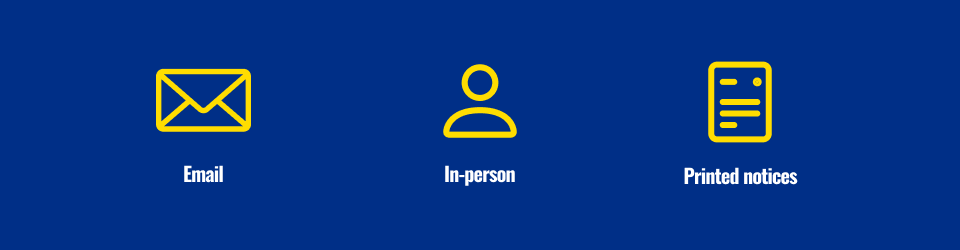
Not every customer responds to the same format. Match your communication channel to the service type and relationship:
- Email: Best for recurring services like maintenance contracts or subscriptions.
- In-person: Use for high-value clients or large projects, especially when technicians regularly visit sites.
- Printed notices: Ideal for smaller, one-off jobs where face-to-face conversations aren’t practical.
Simpro’s field service CRM makes it easy to manage and automate these communications across all customer touchpoints.
Notify customers with a consistent message, through multiple channels to increase the likelihood of customers seeing the message. For example, you can email customers first, then include the update in your app or technician script.
Framing Your Message for a Positive Reception
How you present a price increase can influence how your customers perceive the interaction. Focusing on the value you provide, rather than just the cost, helps customers understand why the change is necessary and keeps their trust intact.
Jon Mailer, CEO and Founder of business coaching and advisory firm ProTrade United, recommends raising prices on an annual or 6-month basis. “If you pride yourself in your work, and believe you are delivering value, then it is about time you also valued your experience and expertise,” says Mailer. This mindset supports honest conversations with customers about why price adjustments are part of sustaining quality service.
- Start by clearly explaining the benefits that come with the new pricing. For example, highlight improvements such as faster response times, higher-quality materials, expanded service options, or upgraded technology that enhances reliability. Remind customers that pricing changes support your ability to continue delivering reliable, compliant, and high-quality service. When customers see that price increase enables better service and outcomes for them, they are more likely to accept the new price.
- Use positive, customer-focused language in your messaging. Phrases like “to continue delivering exceptional service,” “to maintain the quality you expect,” or “to invest in innovations that benefit you” set a constructive tone. Avoid language that sounds defensive or vague, such as “due to increased costs” without context, or “we have to raise prices.” Instead, be transparent and explain the reasons behind the adjustment with empathy.
- Acknowledge customer concerns to show that you value their perspective. For example, you might say, “We understand price changes can be challenging, and we appreciate your continued support.” This helps build goodwill and reassures customers that you’re considerate of their needs.
- Offer additional value or perks alongside the price increase to ease the transition. This might include priority scheduling, bundled services at a discount, or extended support hours. These gestures demonstrate your commitment to their satisfaction even as prices adjust.
- Ensure your entire team understands the reasons for the price increase and how to communicate it consistently. Field technicians, customer service representatives, and sales staff should all be prepared to explain the changes confidently and professionally. A unified message reinforces trust and prevents confusion.
By thoughtfully framing your price increase message, you can maintain strong customer relationships and turn a potentially difficult conversation into an opportunity to reinforce your value.
Examples of Price Increase Announcements That Work
Example 1: Email Template for Service Contracts
Hi [Customer Name],
Thank you for your continued trust in our services. Beginning [start date], your monthly [service name] plan will adjust from [$old price] to [$new price].
This update reflects our investment in faster response times, better scheduling, and expanded service capabilities.
We appreciate your partnership and are here to answer any questions.
Best regards,
[Your Company Name]
Example 2: Letter Template for Long-Term Clients
Dear [Customer Name],
We are grateful for the opportunity to work with you. As part of our commitment to delivering reliable and compliant service, we will be updating our pricing effective [date].
Your current rate will change from [$current] to [$new] for ongoing work. This ensures we can continue to meet regulatory requirements and invest in tools and training to serve you better.
Please reach out if you’d like to discuss this change.
Sincerely,
[Your Name]
[Your Company Name]
Example 3: On-Site or In-Person Announcement
Technician Script:
“Hi [Customer Name], I wanted to let you know that starting next month, our pricing will adjust slightly to help us continue delivering reliable, high-quality service. If you have any questions, I’d be happy to walk you through the details.”
Provide a printed handout with basic information if the customer needs time to review.
Strengthening Customer Relationships Through Transparent Pricing
Transparency builds trust. When your pricing changes are aligned with improvements in service or operations, communicating them clearly shows that you care about quality and honesty.
Take the time to explain your “why,” give customers notice, and show how the change benefits them. This positions your business as professional, forward-thinking, and trustworthy.
Avoid vague language. Instead of saying “due to inflation,” explain how increased labor or equipment costs are impacting your business. When customers understand the cause, they’re more likely to stay on board.
Next Steps: Improve How You Communicate Pricing
Effective price communication is an opportunity to prove your value. With the right tools and approach, you can protect your margins and your customer relationships.
Not sure whether you need to increase prices? Start by using a labor cost calculator and a job costing formula to ensure your pricing reflects real labor inputs and overheads.
Book a demo to see how Simpro’s built-in reports can highlight your key financial metrics, helping you stay in control of your cash flow, ensure healthy margins, and drive business growth.
Frequently Asked Questions About Price Increases
- 2–4 weeks for one-off jobs
- 1–2 months for recurring contracts
- 3 months for long-term agreements or high-value clients
Yes. Share brief, honest reasons tied to business improvements, such as staffing, compliance, or better equipment.
Use a personal touch. A phone call, personal email, or in-person visit works best for long-term or high-value customers.
Stay calm, be empathetic, and explain the value behind the update. Offer to answer questions or explore service tier options if needed.
Yes, a grace period of 30–60 days can show goodwill and ease the transition, especially for recurring clients.
Use a labor cost calculator and a job costing formula to ensure your pricing reflects real labor inputs and overheads.
A field service CRM like Simpro makes it easy to manage customer pricing data and automate price increase communications. Book a demo to see how Simpro’s built-in reports can highlight your key financial metrics.


 Back to top