
When it comes to getting more HVAC customers in the door, you probably don’t need more calls. Yep, you read that right.
You don’t need more calls. You need the right people calling. The ones who need you. The ones who are ready. The ones with money to spend. Those are the customers you’re after. Right?
Unlike retail and other industries, people don’t call on their HVAC technician on a whim. They can’t be inspired to need HVAC repair, replace an old unit, or build a new home. Instead, HVAC businesses must ensure that they are visible and available at the precise time that people are in need of their services. Your regulars may call you as much as twice a year, but to grow and to increase in profitability, generating HVAC leads is vital.
In this guide, we’ll walk through practical, proven methods to fill your pipeline with high-quality HVAC leads - both online and offline. Whether you're wondering how to get HVAC leads quickly or you're exploring the best way to get HVAC leads for long-term growth, we’ve got you covered. Plus, we’ll show you how to convert those leads into customers with tools like Simpro.
The Nitty Gritty
Understand the different types of HVAC leads and which are most valuable for your business
Learn 15+ strategies to attract more HVAC leads using both digital and traditional channels
Explore real-world examples, expert Reddit insights, and practical, actionable tips
See how field service management and trades software like Simpro can turn leads into loyal customers
Understanding the HVAC Customer Journey
No one understands the HVAC customer's journey better than you. That’s your edge. You know the questions your customers ask, the urgency they feel, and the trust they need. That insight gives you a huge advantage, because it means you can craft marketing and messaging that speaks directly to their needs.
High-level, here are the three stages a customer typically falls under:
- Awareness: Something isn’t right with my HVAC.
- Consideration: What’s the best solution to my problem?
- Decision: This is the company I can trust to fix it fast.
 Pro Tip
Your customers and prospects fall somewhere within this journey. Create content on your website - FAQs, service pages, blog posts, and visible contact info - that answers questions and guides them seamlessly through their questions and concerns.
Types of HVAC Leads
| Type | Description |
|---|---|
| Residential Leads | Homeowners needing repair, installation or upgrades |
| Commercial Leads | Businesses, property managers, and facilities need regular HVAC services |
| Emergency Leads | High-intent HVAC leads needing urgent repair or service |
| Maintenance Contract Leads | Recurring clients needing seasonal or scheduled maintenance |
15+ Best Ways to Get HVAC Leads
1. Google Ads and Local Service Ads (LSAs)
Google’s Local Service Ads connect local businesses, such as HVAC companies, with those seeking their services online.
Why it works: This means your SLA can rank at the top of search results, above organic listings and Google ads, to generate leads from people searching at the moment of need. You also pay per lead, not per click like on Google Ads. This means the return on investment tends to be higher.

Source: Reddit
Here’s an overview of how to get started:
- Check Eligibility: Go to Google Local Services and confirm your service area is eligible.
- Create Your Profile: Set up a Local Services profile with service areas, specific services offered, business hours and emergency availability.
- Submit Verification Documents: This will help you to qualify for the Google Guarantee badge.
- Set Your Budget: The good news is you’ll only pay for qualified leads (calls, messages, or bookings), not clicks.
- Collect & Manage Reviews: Insider tip: aim for 4.8★ or higher as this dramatically improves visibility.
- Go Live & Monitor Performance: Target top zip codes or suburbs within a 20–40 km radius for best ROI.
Pro Tip
Respond to every review, Google rewards engagement and will prioritize your ad listing.
2. Invest in Local SEO
SEO helps your business show up on Google naturally, driving traffic through optimized content and site improvements — no paid ads required.
Why it works: According to pageoptimizer.pro, small businesses investing in SEO see an average ROI of 400% within two years. By ranking for relevant terms people are searching for, you can drive leads for your business for little to no cost. And the good news is, searches for HVAC-related terms are on the rise.
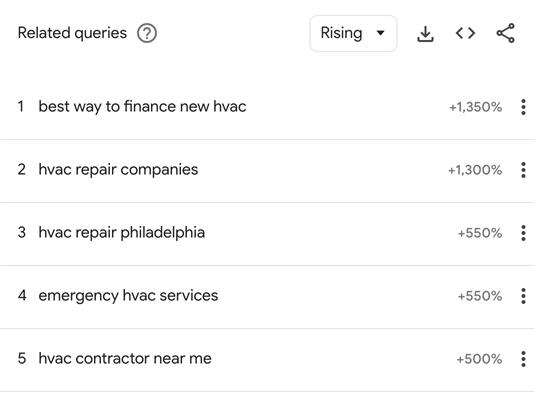
Source: Google Trends, USA data 2025
For a small HVAC business, getting started with SEO doesn’t have to be overwhelming. Focus on the areas that deliver the biggest return locally, but keep in mind that SEO is a long-term play, not a quick fix. This will ensure you have less competition and quicker wins.
Here’s how to do it:
- Claim and update your Google Business Profile: ensure your business name, address, phone number, and service areas are accurate.
- Try this: Add photos, collect customer reviews, and post updates regularly on your Google Business Profile. This helps you appear in local map results when people search “HVAC near me.”
- Improve your website content. Create pages for each core service (e.g. air conditioning repair, furnace installation) and include location-specific keywords like “HVAC services in Denver” on each page.
- Audit-on-page SEO: Optimize your title tags, meta descriptions, and headers so search engines understand what your business offers.
- Finally, build local backlinks. Listings on directories, local chambers of commerce, and partnerships with other trades will help build this.
Pro Tip
Start small, track results in Google Search Console, and concentrate efforts on showing up where your customers are searching. If you’re not sure what to write about, use tools like Google Trends, AlsoAsked, or Reddit to get an idea of what questions homeowners are asking. You can typically find some of the questions from company sales calls if you have them.
3. Use Pay-Per-Click (PPC) Advertising
If you’re looking for quick results, Google Ads (PPC) advertising can be a good place to start.
Why it works: When people need your services, Google is often their first stop. By targeting high-intent keywords like ‘HVAC repair near me’, you can use paid ads to ensure your business appears right when people are actively searching for a solution.
Warning: According to Invoca, the average cost per click for HVAC-related terms is $41.24, so be prepared to invest a hefty sum to get returns on this channel.
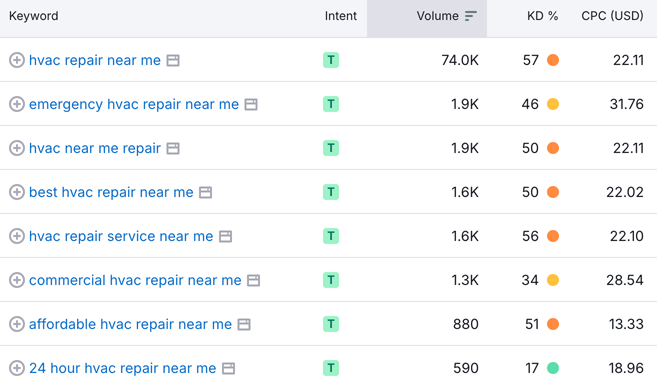
Source: SEMRUSH, USA search. Screenshot from October 2025.
How to do it:
Start simple. Run Search Ads targeting your city and key services (e.g. “AC repair Austin”). Use exact match keywords to avoid wasting budget on irrelevant clicks.
Pro Tip
Set up call tracking so you know which ads drive real leads, not just clicks. That’s how you’ll spot what’s actually working and scale your spend with confidence.
4. Social Media Marketing
Social media is a great tool for staying visible and building credibility. This reminds people you’re the go-to HVAC team when something breaks.
80% of home services businesses are using platforms like Facebook, Instagram, and Nextdoor to connect with customers and build buzz. (Source: Valve + Meter)
How to use it effectively:
- Show your work. Post before-and-after photos of installs, repairs, and maintenance jobs. Homeowners love seeing real results.
- Share quick tips. Post seasonal reminders like “Time to clean your filters before summer hits” or short videos showing easy maintenance checks. It positions you as helpful and approachable.
- Go behind the scenes. Introduce your team, show a day on the job, or highlight safety practices - this humanizes your brand.
- Leverage LinkedIn for commercial leads. In a Reddit thread on HVAC marketing, someone noted how they used LinkedIn content to reach property managers and facility clients. See for yourself.
- Be responsive. Reply to comments and messages quickly when you can. People often ask questions on social media first, and fast replies can turn curiosity into a booked job.
Pro Tip
Community-based platforms like Facebook can even double as customer support, where you can answer common questions and turn helpful interactions into new leads. Get creative. Try different things to find what works for your business and customers.
5. Run Referral Programs
Referral programs make it easier for customers to spread the word. The best programs are simple and worthwhile. A small reward, like $25–$50 off a future service or a gift card, is usually enough to motivate both the referrer and the new customer. It’s affordable for you, but meaningful for them.
Why it works:
Homeowners trust recommendations from friends and family more than if they were to see an ad. When you make it easy and rewarding, those everyday conversations can turn into a steady stream of new leads.
How to make it work:
Check out this great example of what ‘good’ looks like at donsheatingandcooling.com
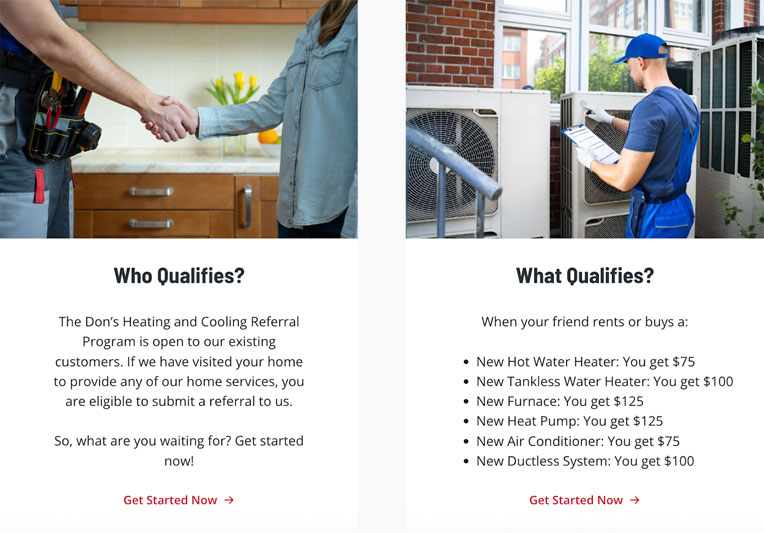
Why This Referral Page Works
- Simple, three-step process: The referral flow — Submit referral → Friend installs → Get paid — makes the program feel effortless and rewarding.
- Tailored to HVAC services: Referrals are linked directly to the company’s core offerings, reminding customers of everything they can recommend while highlighting the strong earning potential.
- Built-in trust signals: Including a testimonial adds credibility and reassures potential referrers that the program is legitimate and worthwhile.
- Clear, repeated CTAs: Multiple “Get Started Now” buttons guide users to a short on-page form, reducing friction and boosting conversions.
Pro Tip
Create a dedicated referral page on your website that explains the offer, how it works, and what both parties get.
6. Partner With Local Businesses
Your best HVAC leads don’t always come from customers. They often come from other trades. Builders, electricians, plumbers, and strata managers already work with the same clients you want to reach, so teaming up can open a steady pipeline of qualified jobs.
Why it works:
You share customers, add value through bundled services, and build trust through referrals. A recommendation from another trade often carries more weight than any ad.
How to do it:
- Start local: Reach out to builders, plumbers, and electricians you know and offer to exchange referrals or support on joint projects.
- Make it mutual: Help them win more work by bundling HVAC services into their projects.
- Stay visible: Keep in touch with updates and fast communication so you’re top of mind when HVAC jobs come up.
Pro Tip
Strata and property managers are especially valuable partners. They need dependable HVAC teams on call for maintenance, emergencies, and compliance checks.
7. Build Trust With Online Reviews
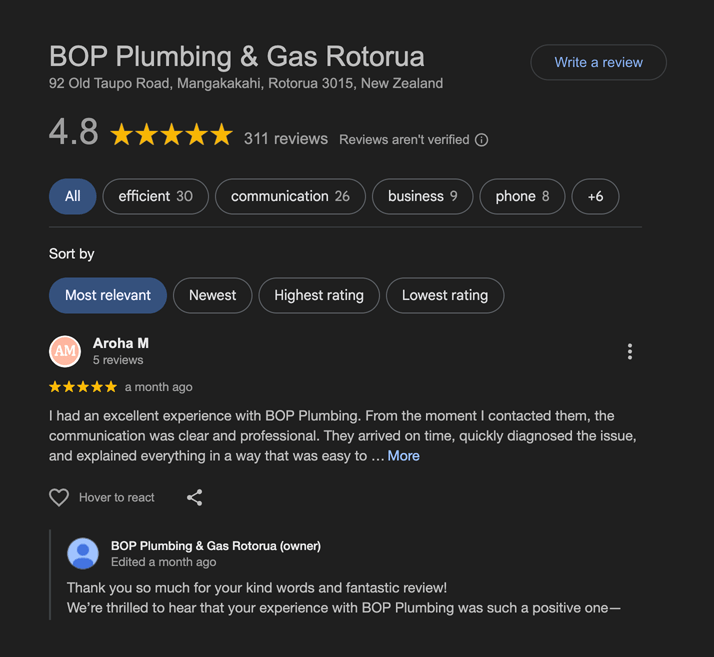
Online reviews are one of the fastest ways to win trust, especially for local HVAC work, where homeowners often choose the company with the most genuine feedback.
But most contractors don’t ask for reviews because it feels awkward or pushy. Happy customers are usually glad to help, they just need a reminder and an easy way to do it. Getting reviews could become a competitive advantage.
Why it works:
- Social proof beats sales copy. Homeowners trust other homeowners, so recent, specific reviews remove doubt.
- Boosts local visibility. A steady stream of new reviews improves your presence in local search/maps results.
How to do it:
- Ask at the right moment. Right after a successful job, when the system’s running perfectly and the customer’s relieved, say - “If you’re happy with our work, a quick Google review really helps us out. I can text you the link. It only takes a minute.”
- Make it easy. Don’t expect them to hunt down your business page. Text or email a direct Google Review link, or use a tool like Podium to automate follow-ups.
- Follow up politely. Even happy customers forget. Send one friendly reminder a few days later: “Hi [Name], thanks again for choosing [Business]. Here’s that review link I mentioned, it really helps local customers find us and we appreciate the support!”
- Showcase your wins. Add your best 5-star reviews to your website, social media, and quotes. They’re social proof that builds confidence with every new lead.
Pro Tip
Make leaving a review effortless. Add a QR code to technician business cards, invoices, or job-completion texts so customers can scan and review instantly. The fewer steps they have to take, the more likely they’ll actually do it.
8. Follow-Up and Maintenance Plans
Winning a customer once is good. Keeping them for years is better. Follow-ups and maintenance plans help you turn one-time jobs into long-term relationships and keep your schedule full all year round.
Why it works:
By checking in before problems start, you position your business as proactive, not reactive. It also builds loyalty as customers are far less likely to shop around when you’ve already earned their trust through consistent service and communication.
Plus, prepaid plans create steady cash flow and give you a predictable workload during slow seasons.
How to do it:
- Follow up fast. After every install or repair, send a quick SMS or email to check that everything’s running smoothly. It’s a simple gesture that builds trust and shows professionalism.
- Send seasonal reminders. Message customers before peak seasons - “It’s nearly summer time to book your AC tune-up.” These little nudges keep your name top of mind and fill your calendar before the rush.
- Offer maintenance plans. Create prepaid or recurring service packages that include regular inspections, cleaning, and priority callouts. Customers love the peace of mind, and you get predictable, repeat work.
- Track your follow-ups. Use a system to log customer communication, set reminders, and automate notifications so no one slips through the cracks.
Pro Tip
Use Simpro’s maintenance planner to automate service reminders and recurring maintenance jobs. You can set up alerts for upcoming tune-ups, overdue tasks, or warranty check-ins, keeping your customers informed and your schedule steady.
“
We use Simpro Maintenance Planner to look at our pipeline of work we need to do, as well as our sales figures, to create a complete vision of our business performance. We love that Simpro takes care of all our invoicing now.
9. Work With Property Management Companies
Each property management firm oversees multiple buildings, and with that comes recurring maintenance, emergency repairs, and upgrade work. Build one strong relationship, and you could secure steady, ongoing jobs instead of one-offs.
Why it works:
Property managers need dependable tradespeople who show up. Once you’ve proven you can deliver that, they’ll often stick with you long-term because changing contracts is a headache they’d rather avoid.
How to do it:
- Start small. Reach out to around 10–20 local property management firms that handle the types of buildings you already service. That’s a manageable number to personalize your outreach and learn what gets traction.
- Do your homework. Before contacting anyone, research the properties they manage and the HVAC systems used at those sites. Tailor your pitch around how you can add value.
- Lead with reliability. Property managers care most about contractors who make their lives easier. Offer quick turnaround, transparent communication, and a willingness to act as backup support during peak periods.
- Stay in touch. Track who you’ve contacted, note follow-up dates, and check in periodically. Building trust takes time, but consistency pays off.
- Ask for introductions. Once you’ve impressed one manager, ask if they oversee other sites or know colleagues who need support - referrals within the property management world travel fast.
Pro Tip
If a property manager looks after multiple sites, offer a simple volume discount to make the partnership more appealing. For example:
- 3 sites = 5% off
- 5 sites = 10% off
It shows flexibility, builds goodwill, and helps you secure larger, ongoing contracts. Just make sure your pricing structure can absorb those discounts without eating into your profit. For help keeping your margins strong, check out Simpro’s guide to Good, Better, Best pricing.
11. Go Old School With Flyers & Door Hangers
Sometimes, the simplest old-school tactics still deliver the best results. Flyers and door hangers are a fast, low-cost way to get noticed by people who live or work nearby.
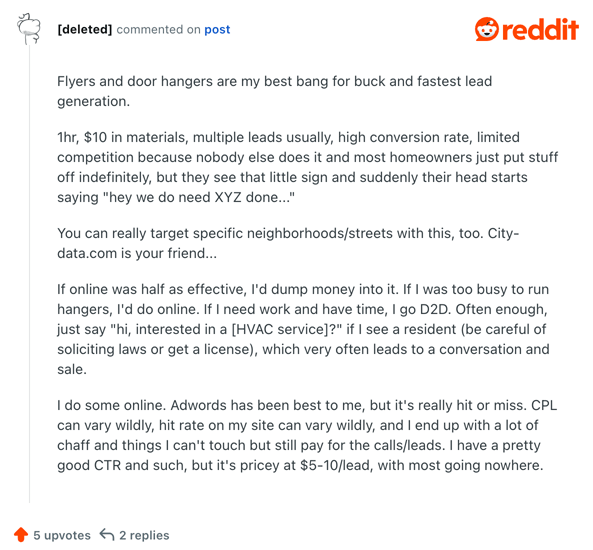
Why it works: On Reddit, one HVAC business owner shared that door hangers have been their fastest and most cost-effective lead source, often beating digital ads.
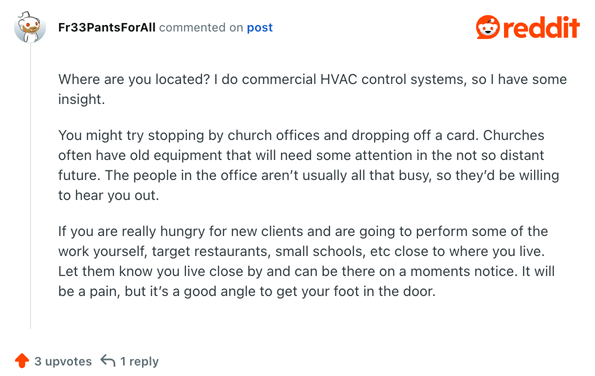
Another Redditor, who works in commercial HVAC control systems, said they’ve won clients simply by visiting local schools, churches, and small businesses with a business card and a smile. Many of those buildings have ageing systems and decision-makers who are happy to chat if you show up in person.
How to do it:
- Target the right areas. Focus on specific neighborhoods or business zones within your service area. Online tools like City-Data.com can help you find ideal suburbs or postcodes based on home age, property type, or income level.
- Keep your message clear. One strong offer (like “Free quote on new installs” or “10% off pre-summer tune-ups”) works better than a long list of services, as it incentivises people to
- Walk the talk. Hand them out yourself or with your team. It’s a chance to meet locals and build connections.
- Don’t overlook commercial spots. Offices, restaurants, schools, and churches often have aging systems and decision-makers on-site.
10. Use Field Service Management Software
When your business starts to grow, keeping track of quotes, schedules, and customer jobs can quickly get messy. That’s where field service management (FSM) software makes all the difference, bringing everything together so your office and field teams stay connected and customers get a smoother experience.
Why it works:
Field service management software gives your team visibility and control. The team can spend less time on paperwork and more time focusing on growing the business.
How to do it:
- Bring everything together. Field service software lets you quote, schedule, and invoice from the same system instead of jumping between spreadsheets and emails.
- Keep your team connected. When your office can see what’s happening in the field (and vice versa), you avoid mix-ups and missed jobs.
- See what’s working. Track jobs, costs, and staff performance so you can spot bottlenecks and make smarter decisions about where to focus your time.
Simpro’s HVAC software was built with real trade businesses that wanted to cut the chaos and get organized.
One of them, 365 Alongside, used to juggle multiple systems and track everything by hand. After switching to Simpro, they were finally able to manage quoting, scheduling, and invoicing in one place, saving hours each week and running jobs more smoothly.

“
We’ve grown from 8 to 22 people in under two years, and a major part of that success has been the way we’ve leveraged Simpro to scale with structure, clarity, and confidence,
Pro Tip
Look for a tool that lets your team work on the go. HVAC businesses spend most of their time on the road, so mobile access is key. Simpro’s Field Service Mobile App lets technicians update job details, capture photos, and send invoices straight from site, keeping your whole team in sync, no matter where they are.
11. Focus on Email Marketing
Email marketing might not sound flashy, but for service businesses built on repeat customers and seasonal demand, it can deliver great results.
Why it works:
Email is a low-cost way to drive repeat bookings and reconnect with past leads, all without spending much. According to Constant Contact, email marketing can generate an average return of $36 for every $1 spent, making it a cost-effective way to grow your HVAC leads.
How to do it:
- Automate your follow-ups. Send a quick thank-you message after every completed job, include a review link, and remind customers about your referral offer.
- Share seasonal tips. A short email like “5 ways to prep your system for summer” keeps your business helpful and visible between service calls.
- Segment your list. Separate residential from commercial clients so your messages stay relevant. Homeowners want maintenance reminders, while property managers might prefer service contracts or upgrade info.
- Re-engage dormant leads. Send check-in emails to past customers offering a discount or inspection special before peak season hits.
- Keep it simple. One clear message, one strong call to action (like Book your winter service now) works best.
Pro Tip
If you’re using Simpro’s field service CRM software, you can store contact details, track job history, and manage customer communication all in one place. Then use the Mailchimp integration by Simpro to send professional-looking emails and track performance over time. Together, they make it easy to automate follow-ups and stay connected with your customers year-round.
12. Attend Local Trade Shows
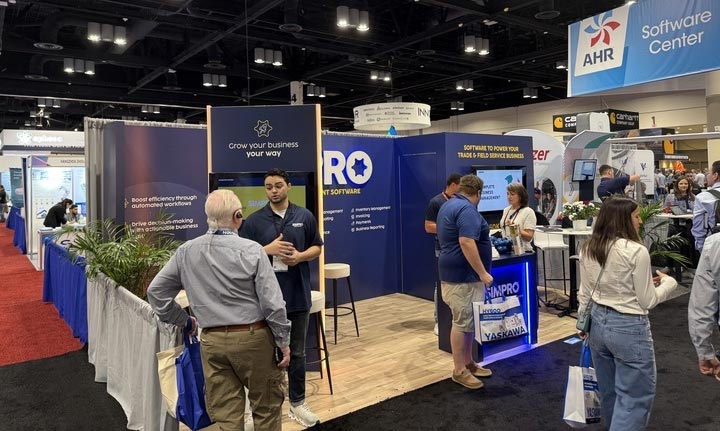
Trade shows are a great way to make local connections. Showing up face-to-face puts your business in front of the right people.
Why it works:
When people can meet you, see your work, and ask questions in person, it builds confidence that’s hard to replicate online. Plus, smaller community events often bring in property owners, business managers, and facility operators, exactly the kind of local leads that can grow into long-term contracts.
How to do it:
- Pick the right events. Start with regional HVAC expos, facility management events, or community trade fairs. Even local council or business chamber events can attract property managers and business owners who need regular HVAC support.
- Showcase your expertise. Bring along visuals of your recent installs or maintenance projects, and if possible, demo your latest tools and solutions.
- Collect contact details. Have a simple way to gather emails - a giveaway, QR code sign-up, or digital form. Follow up quickly while your name’s still fresh.
- Network with purpose. Chat with builders, electricians, and maintenance firms. These connections often lead to partnership or subcontracting opportunities later on.
Pro Tip
Check out Simpro’s guide to top HVAC trade shows to see which events align best with your business.
13. Use Smart Stickers
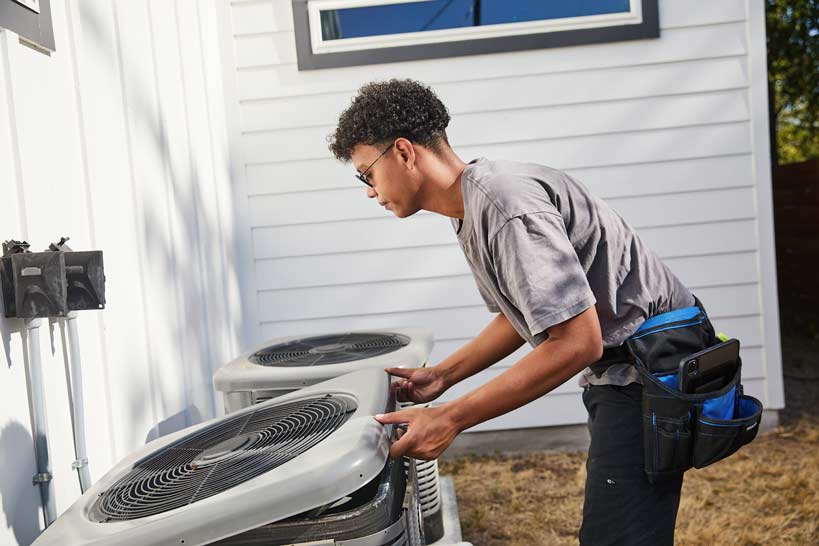
Sometimes, simple tactics work best. A sticker on relevant equipment can keep your business front and centre when customers need help fast.
How to do it:
- Add clear contact info. Include your phone number, website, and service hours right on the sticker or magnet. Make it easy for customers to reach you the moment something goes wrong.
- Pair with a simple message. “Is your system ready for summer?” or “Don’t get caught in the cold - book your service today.”
- Put it somewhere people will look at their moment of need, for example, on a boiler.
Why it works:
When HVAC issues occur, the thermostat is usually the first thing people check. And since heating and cooling account for nearly 50% of household energy use (Energy Star), a branded sticker near it keeps your business top-of-mind right where decisions get made.
Pro Tip
Refresh your stickers and mailers each time you visit. Over time, they fade and could become unreadable. Updating them keeps your contact information visible.
14. Create Lead Magnets Like eBooks and Guides
Not every homeowner or property manager is ready to pick up the phone, but they are looking for advice. That’s where lead magnets come in. A useful resource can help you capture their interest and turn it into a future lead.
How to do it:
- Share your expertise. Turn your team’s know-how into short, valuable resources like “Why Is My AC Not Cooling?”, “HVAC Maintenance Tips Every Homeowner Should Know”, or a “Seasonal HVAC Service Checklist.”
- Make it easy to access. Offer the guide as a free download on your website in exchange for an email address. Keep the form short — name and email is enough.
- Focus on real-world value. Avoid sales talk. Give practical, actionable advice that readers can use.
- Automate your follow-up. When someone downloads your resource, send a short thank-you email or make a friendly follow-up call offering further help, before they forget your name or find another company online.
- Promote it everywhere. Share the link on social media, include it in your email footer, and feature it on your homepage or blog.
Why it works:
- It builds trust by offering real help before asking for anything.
- Captures qualified leads who’ve already shown interest in HVAC maintenance or upgrades.
- Position your business as a local expert.
- Keep your brand top of mind, so when they do need a repair or install, they come straight to you.
Pro Tip
Use tools like Canva or Google Docs to design your guide, and track downloads through Google Analytics or your email platform. If you notice a particular topic (like “AC not cooling”) getting lots of downloads, that’s a strong signal to create more content, or even a service package around that need.
15. Use Lead Generation Platforms
Lead generation platforms like Angi (formerly Angie’s List), HomeAdvisor, and Thumbtack can help you fill gaps in your schedule, but they’re not a silver bullet. Used strategically, they can deliver a steady stream of leads. Used carelessly, they can eat through your budget fast.
Why it works (and where it doesn’t):
Lead generation platforms can help newer HVAC businesses get visibility quickly, but they also come with high competition, shared leads, and variable quality.
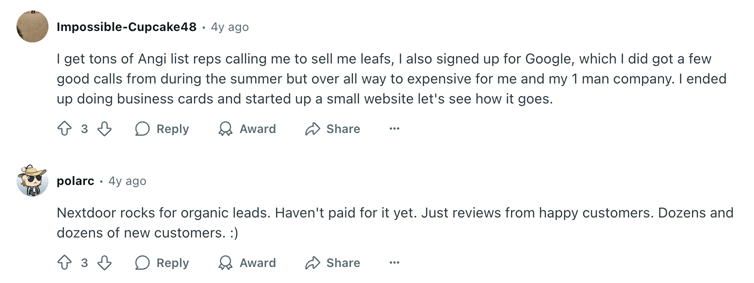
Many contractors warn that results vary. On Reddit’s r/HVAC, one HVAC professional said they get constant calls from Angi reps trying to sell leads, but that the leads are “too expensive” for the quality they deliver. It’s a common theme: you’re often paying for shared or low-intent leads where price, not service, wins the work.
That’s why many established HVAC businesses use these platforms only to fill quieter weeks or test new service areas, while focusing most of their effort on owned channels like reviews, referrals, and their own website.
How to do it:
- Start small. Test one or two platforms at a time with a clear monthly budget. Track how many leads actually convert into paying customers, not just how many inquiries you get.
- Set filters carefully. Most platforms let you choose service types, locations, and job size. Narrow it down so you’re only paying for the kinds of jobs that are profitable for your team.
- Follow up fast. Lead-gen platforms are competitive. Homeowners often message multiple contractors at once, so the first person to respond usually wins the job.
- Monitor ROI. If you’re spending $300 for $200 worth of jobs, it’s time to pull back or switch focus. Keep detailed notes on cost per lead and conversion rates so you know whether it’s worth it.
Pro Tip
Read the fine print before signing up. Some platforms charge for every lead, even if the customer never books. Always track your return on investment, and once you start getting steady leads from your website, reviews, and referrals, shift your budget back to owned channels where you control the quality (and keep the full profit).
What if You Already Have a Pool of Leads?
Got a bunch of old contacts gathering dust? Don’t write them off. Those names could be your next installs, service plans, or word-of-mouth referrals. Here's how to turn those warm HVAC leads into booked jobs and long-term customers:
- Segment your leads. Group them by interest, location, or service history so you can tailor follow-ups. For example, filter out customers who had installations last summer - they may now need maintenance.
- Send personalized follow-ups. Don’t just batch-blast emails. Use their name, reference their last service, and suggest next steps based on timing.
- Set up a re-engagement campaign. Offer a limited-time discount or seasonal service (like winter tune-ups) to get past clients back in the door.
- Leverage content. Share a useful blog post or resource like a maintenance checklist or "what to do before calling your HVAC tech." You can use Simpro’s HVAC maintenance checklist to get started.
- Reach out manually. Sometimes, a personal call to follow up on an old quote is all it takes to revive a lead.
- Automate wisely. Use your CRM or field service software to build follow-up sequences, birthday offers, and seasonal prompts.
- Ask for referrals. When you reconnect with a past customer, ask if they know anyone who could use your services. Sweeten the deal with a referral discount.
- Add value, don’t just sell. Send tips for energy efficiency, how to check filters, or common HVAC myths. Helpful content builds trust and increases the chances of repeat work.
The key is consistency. These are warm leads; you’ve already done the hard part. Now it’s about smart timing, helpful reminders, and staying top-of-mind.
Ready to Grow Your HVAC Leads?
The playbook above - Google Ads, SEO, referrals, trade shows, even old-school flyering will get the phone ringing. Turning those inquiries into paid jobs (and repeat work) comes down to how smoothly you run the handoff from first contact to finished job.
From lead to loyal, step by step:
- Capture every lead in one place. No lost calls or missed forms.
- Quote fast and clearly. Speed wins - send a simple, professional quote while you’re top of mind.
- Schedule without chaos. Get the right tech to the right job, first time.
- Keep customers in the loop. Short updates reduce no-shows and build trust.
- Invoice promptly and follow up. Make it easy to pay, then invite them onto a maintenance plan.
Simpro brings this whole flow together. Lead tracking, quoting, scheduling, job updates, invoicing, and maintenance reminders, in one system, so your team spends less time juggling and more time doing the work.

Ready to take your HVAC business to the next level?
Book a free demo of Simpro’s HVAC software to turn more first calls into lifelong customers.


 Back to top